

Wicker floor lamp
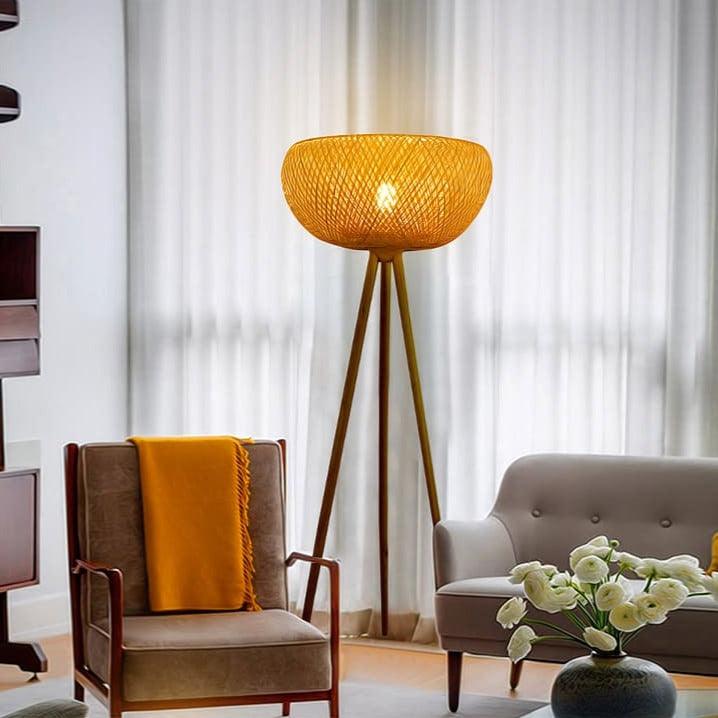
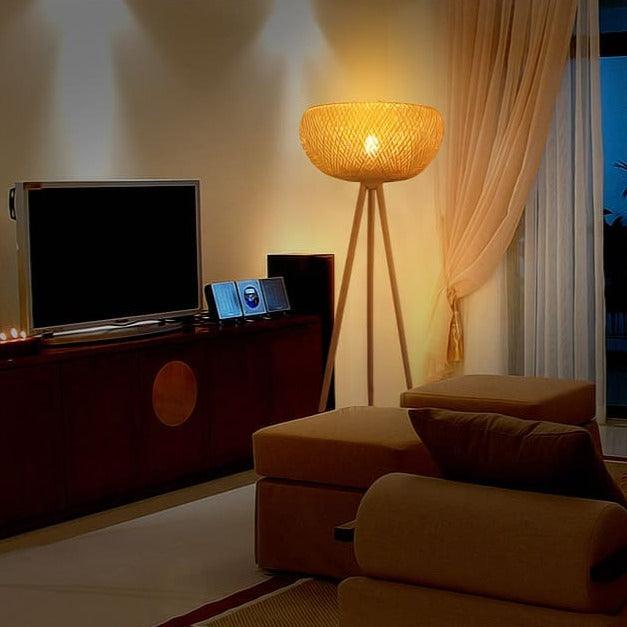
Wicker holds light differently than any other shade material. The gaps between woven fibers cast patterns across walls and ceilings, not as a stylistic gimmick but as a direct consequence of how the material is constructed.
It is one of the few textures that participates in the atmosphere of a room without asking for attention.
A wicker floor lamp works in part because it refuses to be neutral. Its organic structure introduces visual warmth that polished surfaces, concrete, lacquered metal, smooth plaster, cannot generate on their own.
Placed beside a reading chair or anchored in the corner of a living room, it reframes the surrounding space without overriding it.
At Glowe Studio, each piece in our floor lamp collection is chosen for its construction integrity as much as its visual presence. The wicker models featured here are sourced from workshops where weaving techniques have been refined over generations, not mass-produced approximations of a handmade aesthetic.
What wicker does to a room
The light transmission of a wicker shade depends almost entirely on the tightness of the weave. An open lattice pattern allows light to scatter broadly across the surrounding walls, creating a diffused glow that extends well beyond the immediate source.
A denser, tighter braid concentrates the beam downward, functioning more like a reading light, directional and deliberate.
This variability makes wicker an active element in the lighting plan of a room, not a passive decorative choice. The shadows it casts shift through the day as natural light changes, which gives the lamp a different presence in the morning than it has at dusk.
Few materials behave this dynamically at this price point.
Scale, silhouette and placement
Floor lamps are among the few light sources that operate at human scale. Their height positions the shade at eye level or just above, which means proportions matter more than they do for ceiling fixtures.
A wicker shade that reads as oversized in isolation will often feel precisely right once placed against a sofa or a bookcase, where the furniture gives it something to respond to.
Arc configurations extend that logic further.
By projecting the shade beyond the base, they position light exactly where it is needed without requiring the lamp to occupy the same footprint as the activity it serves.
Above a low table or a reading corner, the arc wicker floor lamp solves a geometry problem as much as a lighting one.
Wicker alongside other materials
Natural fiber integrates well with materials that have their own surface character: raw linen, brushed brass, matte black iron, textured plaster, unfinished oak.
It tends to read as out of place only when surrounded by surfaces that are too uniform, high-gloss lacquer, mirror glass, ultra-polished stone. In those contexts, it can feel like an intruder rather than a complement.
Our rattan floor lamp collection shares some of these qualities but delivers a smoother, more structured finish.
Where rattan reads as refined, wicker reads as honest, a distinction that matters depending on the register you are working with.
Construction and long-term durability
Well-constructed wicker does not dry out, crack, or shift shape when used in a climate-controlled interior. The key variables are the quality of the fiber at source, the presence of a rigid internal frame, typically galvanized steel, and the finish applied to protect the weave against dust accumulation.
A lamp built on these principles will hold its shape and color for years without demanding anything beyond occasional light cleaning.
The base and pole deserve the same attention as the shade. A slender brass stem or a matte black rod grounds the organic quality of the wicker without competing with it.
The junction between materials, where metal meets fiber, is where construction quality becomes most visible.
Wicker floor lamp: a practical guide to finding the right fit
Not all wicker floor lamps are made the same way, and the differences matter more than catalog photography suggests. What follows addresses the specific questions that come up when narrowing down a choice, by style, shade type, scale, or finish.
Styles and aesthetic registers
Vintage wicker floor lamp
A vintage wicker floor lamp typically features a shade with a more traditional silhouette, barrel, empire, or bell-shaped, paired with a turned wooden or aged brass pole. The weave tends to be denser, the proportions heavier. In a contemporary interior, this kind of piece works best when it is allowed to stand as a clear reference point rather than blending into the background.
Antique wicker floor lamp
Antique models, either original pieces or faithful reproductions, carry a construction logic that modern manufacturing has largely abandoned. The joints are often hand-tied rather than glued, and the fiber shows the slight irregularities that come from working without templates. An antique wicker floor lamp introduces a level of detail that machine-made alternatives cannot replicate, regardless of price.
Wicker floor lamp vintage
The vintage aesthetic in wicker translates across different shade geometries and finishes. A lamp described as vintage-style may reference the 1960s Scandinavian craft tradition, clean lines and natural tones, or the heavier rattan revival of the 1970s. Understanding which reference a specific piece draws from helps predict how it will interact with the rest of the room.
White wicker floor lamp
White-finished wicker reflects more light than its natural counterpart and creates a cleaner, lighter visual presence. It works particularly well in spaces with a lot of natural daylight, where the shade reads as almost translucent during the day and takes on a warm glow at night. The white finish also makes it easier to integrate into neutral palettes without introducing the amber warmth that natural wicker brings.
Shade types and configurations
Floor lamp with wicker shade
The shade is where the character of the lamp lives. A floor lamp with a wicker shade shifts the quality of light from flat to textured, the weave intercepts part of the beam and redirects it in ways that a plain fabric shade cannot. The practical result is a more interesting wall surface and a more layered sense of depth in the room.
Wicker shade floor lamp
Choosing a wicker shade floor lamp over a fabric or metal equivalent is largely a decision about surface behavior. Wicker does not absorb light, it refracts it. The shade becomes partly luminous rather than purely opaque, which changes the relationship between the lamp and the ceiling above it. That ceiling bounce is often what gives a room its sense of height in the evening.
Floor lamp wicker shade
The connection between pole and shade affects how grounded or floating the lamp reads in a space. A shade sitting flush on a narrow stem tends to look more architectural. One suspended from a visible hardware fitting reads more as a craft object. The right choice depends on whether the lamp is meant to disappear or to be noticed.
Wicker floor lamp shade
Replacing only the shade on an existing lamp base is an underused option. A wicker floor lamp shade fitted to a standard E27 socket can transform the identity of a pole that was previously working with fabric. The result is a hybrid piece that combines a base you already own with a material shift that changes the entire atmosphere of the light it produces.
Scale and format
Large wicker floor lamp
Scale changes the role a lamp plays in a room. A large wicker floor lamp with a shade diameter above fifty centimeters stops being a lighting accessory and starts functioning as a room anchor, a vertical mass that other furniture organizes around. In a high-ceilinged space, this is exactly what is needed to bring the eye back down to a livable level.
Tall wicker floor lamps
Height affects both the reach of the light and the visual weight of the lamp within the space.
Tall wicker floor lamps, those exceeding one hundred and eighty centimeters, work well in double-height spaces or rooms where the architecture itself is generous. In a standard-height room, the same lamp can read as too assertive; scale always needs to be calculated relative to the specific volume it will occupy.
Wicker floor lamps rattan
Both wicker and rattan belong to the same broad family of plant-fiber lighting, but they behave differently under tension and in contact with light.
Rattan's smoother, more uniform surface creates a consistent diffusion across the entire shade. Wicker's irregular weave introduces more variation, lighter where the gaps are wider, denser where the strands overlap.
Lamps described as wicker floor lamps rattan often combine both for structural and aesthetic reasons.
Floor lamp wicker
At its most reduced, a floor lamp wicker is simply a pole, a socket, and a woven shade. That simplicity is part of the appeal: nothing extraneous, no excess hardware, no decorative gesture beyond the material itself.
The craft is visible in the weave and in the proportions, which is why construction quality matters so much more here than in more complex, mixed-material designs.
Wicker floor lamps
A collection of wicker floor lamps spans a wider range of formats and intentions than most categories in interior lighting.
From slender Scandinavian-inspired silhouettes to broad, overscaled shades with a more southern European character, the unifying thread is always the material and what it does to the light passing through it.
That consistency is what allows wicker to move between very different interior contexts without losing its identity.